Andrew Turnbull Joins Pepperstone as Head of Africa
Pepperstone has appointed Andrew Turnbull as its new Head of Africa, a role based in Nairobi that will oversee the broker's strategy across the continent. The hire comes as mobile trading grows and regulators tighten oversight of forex and CFDs.

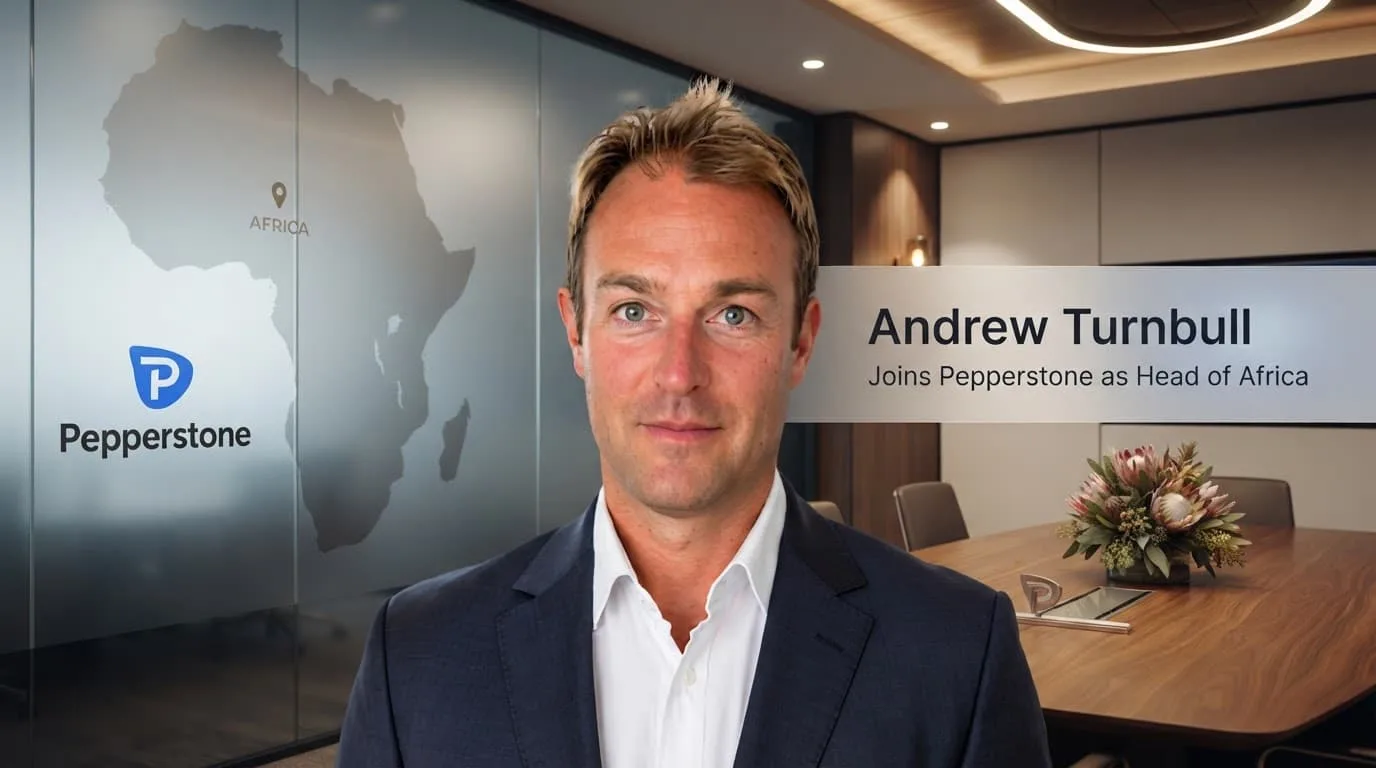
Pepperstone, the Australia-based online trading provider, has appointed Andrew Turnbull as its new Head of Africa. Based in Nairobi, Turnbull will oversee the company's strategy across the continent. The company says the hire will support its plans in a region where mobile trading continues to gain traction and regulators are increasing oversight of the forex and CFDs sectors.
Who Is Andrew Turnbull?
Turnbull returns to the foreign exchange and CFD industry after almost 20 years in senior, UK-based positions at ODL Securities and FXCM. In those roles he focused on institutional sales and partnerships, building relationships between the brokerage and institutional clients.
He left FXCM in 2013 to establish Wellesley Group Investors, an alternative property finance company. His move back into trading now brings a background in institutional business to a role that will focus on a fast-changing African market.
Andrew Turnbull: Why Pepperstone Is Focusing on Africa
Pepperstone points to two trends behind the appointment. The first is the growth of mobile trading, which makes online access to markets easier for people who may not have used a desktop platform before. The second is tighter regulatory attention. Regulators across the region are increasing oversight of forex and CFD providers, which means brokers need dedicated local expertise rather than a single global approach.
Pepperstone's Head of EMEA, Marc Boever, explained the reasoning behind the hire:
"Africa includes dozens of separate regulatory systems and trader communities, so we are increasing our local resources and investing in people who understand the region. Andrew brings experience in regulated financial services and institutional partnerships, along with first-hand knowledge of markets such as Kenya. That makes him well suited to lead our work across Africa."
The key point in that statement is the fragmentation Boever describes. Each country has its own rules, licensing requirements and client expectations, so a regional lead needs to understand those differences in practice, not just in principle.
Kenya, the CMA Licence and the Wider Regulatory Picture
Pepperstone holds a licence from Kenya's Capital Markets Authority (CMA). Kenya was one of the first African countries to establish a formal regulatory framework for online forex trading. According to the company's account, the early introduction of these rules helped create a more established market, where licensed brokers have gained greater trust among traders.
Kenya's approach is also cited as a reference point for other African regulators who are looking to strengthen oversight of online trading. For that reason, Turnbull's first-hand knowledge of the Kenyan market is likely to be relevant as Pepperstone looks at other markets in the region.
Technology Investment and the Client Experience
The appointment follows Pepperstone's investment in its own technology. By taking greater control of its systems, the broker says it can improve the trading experience and respond more effectively to the needs of clients in different markets. In practice, this means the company can adjust its platforms and services to local conditions rather than relying entirely on fixed, centrally managed setups.
Turnbull's own comments reflect the same local focus:
"Kenyan traders were among the first in Africa to access a properly regulated forex market, and that early start is still visible today," Turnbull said. "Interest in online trading is growing across the continent, but each market has its own conditions and requirements. I look forward to expanding Pepperstone's presence in Africa and working with our teams and partners to better understand and support traders in each community."
What the Appointment Could Mean for Traders
The announcement focuses on leadership and strategy. It does not describe specific changes to products, account types, pricing or trading conditions, so it is too early to say how Pepperstone's offering in African markets will change. Traders should watch for official updates from the company rather than assume changes that have not been announced.
What the appointment does show is a clear commitment to dedicated regional leadership. For traders in Africa, that could mean more locally focused communication and support over time, but the real test will be in the details the company publishes in the months ahead.
How to Check a Broker's Regulation Before You Trade
Whatever broker you use, regulation is the first thing to verify. The steps below apply to any provider, not only Pepperstone.
- Identify the licensed entity. Brokers often operate through several companies in different jurisdictions. Find the exact legal name of the company you would contract with.
- Check the regulator's own register. Search the regulator's official website for that entity and confirm its licence status. Do not rely only on logos or claims on a broker's marketing pages.
- Confirm the jurisdiction matches your account. Make sure the entity you are onboarded with is the one that holds the licence you have checked.
- Read the client agreement. Look for how client funds are handled, which dispute and complaint routes apply, and which rules govern your account.
- Compare costs and conditions. Review spreads, commissions, leverage and withdrawal terms in writing before depositing.
Key Checks at a Glance
| Check | Why It Matters | Where to Look |
|---|---|---|
| Regulator and licence | Confirms the broker is authorised to serve clients in that jurisdiction | The regulator's official register |
| Licensed entity name | Shows which company holds the licence and which rules apply to your account | Website footer, client agreement |
| Client fund handling | Determines how your deposits are held and protected | Terms and conditions, regulator guidance |
| Costs and trading conditions | Affects your real trading results and withdrawal experience | Published pricing and account terms |
| Complaints process | Tells you where to escalate if something goes wrong | Client agreement, regulator website |
If you are comparing brokers more broadly, our XM Group review shows how we assess a broker's regulation, costs and account terms, and you can apply the same checklist to any provider.
About Pepperstone
Pepperstone is an Australia-based online trading provider offering access to forex and CFD markets. Its Head of Africa role, now held by Andrew Turnbull, is one part of a wider effort to build local expertise across markets with different regulatory systems.
Risk reminder: CFDs and leveraged forex trading carry a high risk of losing money quickly because of leverage. Only trade with money you can afford to lose, and make sure you understand the risks before you start.
Further reading: Contract for difference (Wikipedia).
We will keep this Andrew Turnbull report updated as new information comes in.