Capitolis Appoints Jon Gizzie to Lead Financial Resources
Capital-markets fintech Capitolis has appointed Jon Gizzie as Head of Financial Resource Management. Here is what the role covers, his background at Citi and PwC, and what the move signals for the market.

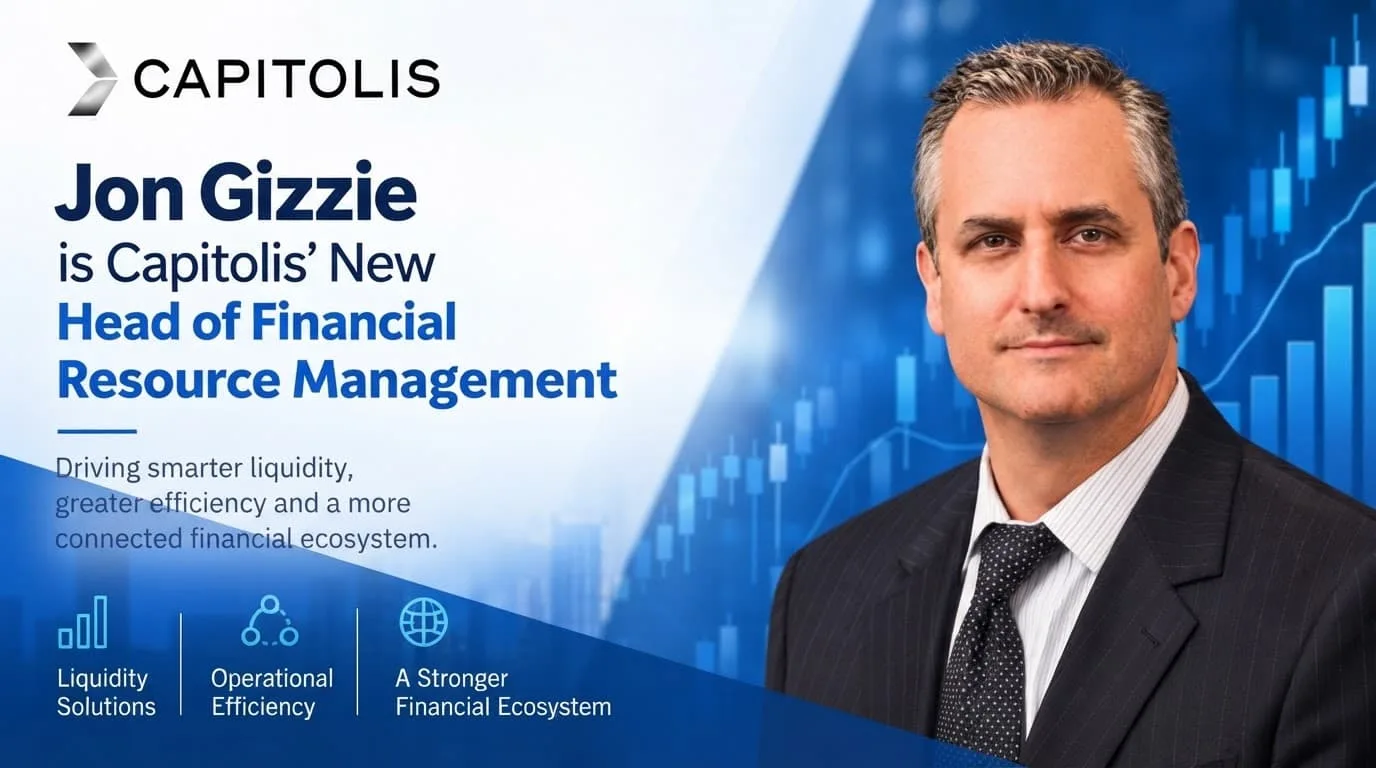
Capital-markets fintech Capitolis has appointed Jon Gizzie as its Head of Financial Resource Management. Gizzie brings more than 30 years of experience in capital, liquidity, balance-sheet optimization and derivatives, and he will lead the development of the company's financial resource management offering. The appointment places a senior specialist in financing and capital at the center of Capitolis's work with banks and institutional investors.
What the Appointment Means for Capitolis
The new role is focused on financial resources, a discipline that sits between treasury, risk and balance-sheet management. Capital and liquidity are finite for any bank, and how efficiently a firm uses them determines how much business it can take on. Capitolis's platform is built around helping clients get more out of those constraints, so a dedicated leader for this area signals that financial resource management is a core part of the company's product direction rather than a side service.
For readers new to the topic, it helps to think of a bank's balance sheet as a limited budget. Every loan, derivative or funding arrangement uses part of that budget. Financial resource management is the process of deciding where that budget goes and how to replenish it when demand exceeds supply.
In his new position, Jon Gizzie will work with banks and institutional investors on solutions for their financing, capital and liquidity needs. That covers the practical questions institutions face every day: how much capital a trade or portfolio consumes, where liquidity is tied up, and how financing can be arranged more efficiently.
Reporting Line and Responsibilities
Jon Gizzie will report to Capitolis President Okan Pekin. His responsibilities centre on building out the financial resource management offering and developing solutions for client institutions. The announcement does not describe specific products, launch dates or pricing, so any detail beyond the scope of the role should be treated as unconfirmed until the company publishes it.
In practice, a role like this often involves several workstreams. These can include defining the product scope, speaking with client institutions about their constraints, and working with engineering and commercial teams to turn those conversations into tools. The exact structure at Capitolis has not been published, so readers should avoid assuming a specific set of deliverables.
Jon Gizzie's Background
Gizzie's career combines large-bank financial management, derivatives and professional advisory work. Before joining Capitolis, Jon Gizzie was Global Head of Financial Resources Management for Citi's Client Organization. In that role he led a team that optimized capital, liquidity and tax resources across Citi's businesses and client segments.
Earlier at Citi, he worked on derivatives structuring for financial institutions, asset managers and pension funds. His experience also includes:
- Capital planning and stress testing
- Risk transfer
- Broker-dealer regulation
- Finance technology transformation
- M&A advisory
He began his career at PricewaterhouseCoopers, where he spent 13 years advising private-equity clients on M&A due diligence and transaction strategy. That early advisory experience gives him a view of deals from the outside, which complements the internal treasury and balance-sheet work that followed.
Why This Mix of Experience Matters
Financial resource management requires understanding several areas at once. Capital rules shape what a bank can hold, liquidity determines what it can fund, and derivatives structuring determines how exposures are managed and transferred. A leader like Jon Gizzie, who has worked on all of these from the bank side and has also advised on transactions, is well placed to design tools that match how institutions actually make decisions.
Key Terms Explained
The announcement uses several technical terms. The table below gives a plain-English definition of each.
| Term | What it means in practice |
|---|---|
| Financial resource management | Managing how a firm uses and allocates capital, liquidity and financing across its business |
| Capital | The financial buffer a firm must hold, which limits how much risk and activity it can support |
| Liquidity | The ability to meet payment and funding obligations as they come due |
| Balance-sheet optimization | Structuring positions and funding so that scarce capital and liquidity are used efficiently |
| Derivatives structuring | Designing derivative transactions to meet a client's risk, return or financing objective |
| Risk transfer | Moving part of a risk exposure to another party, often to free up capital |
For background on the rules that shape bank capital and liquidity, see Financial regulation (Wikipedia).
About Capitolis
Capitolis provides capital-markets technology for banks and institutional investors. Its solutions help clients manage capital constraints, optimize portfolios and increase their financing and investment capacity. The company says more than 100 major financial institutions use its platform.
What This Means for Traders
Most retail traders will never interact with Capitolis directly. Its clients are banks and institutional investors, and the company works at the infrastructure level of capital markets. Still, the forces it addresses, including capital costs, liquidity and balance-sheet efficiency, shape the conditions traders encounter. When banks have more capacity to finance and intermediate trades, market access and funding can be more stable. When capital is tight, those conditions can tighten too.
The appointment of the gizzie is therefore best read as a signal about where the infrastructure behind markets is being developed, not as a trading event in itself.
Traders who want to understand the firms they trade with can look at how a broker is regulated, how it is funded and how its execution works. Our broker reviews, such as the XM Group review, cover these areas in more detail.
How to Follow Developments Like This One
- Check the primary announcement from the company for the latest details on the role and its scope.
- Look for product launches or partnerships that follow, since they will show how the new offering is being applied.
- Compare any new product claims against what regulators and independent sources confirm.
- Connect leadership news to market impact only when there is clear evidence of a change in client conditions.
Leadership appointments alone rarely change market conditions. They are useful mainly as signals of where a company is investing its attention.
Frequently Asked Questions About Jon Gizzie's Appointment
The appointment has drawn interest from readers following capital-markets technology. The company's announcement covers the core facts, and the questions below summarize them.
Who Is Jon Gizzie and What Is His Role?
The gizzie is the newly appointed Head of Financial Resource Management at Capitolis. He will lead the development of the company's financial resource management offering and work with banks and institutional investors on their financing, capital and liquidity needs.
Does the Announcement Name Specific Products?
No. The announcement does not describe specific products, launch dates or pricing. Readers should treat any details beyond the scope of the role as unconfirmed until the company publishes them.
Where Can Readers Verify the Details?
The most reliable source is the company's own announcement and any later publications from Capitolis. For another example of how we cover industry hiring news, see Selim Kassab Joins D24 Fintech Sales Team.
Trading involves risk, and market conditions can change quickly. Always verify information from primary sources before making decisions based on news, including news about leadership changes at financial technology firms.