
Hukum Forex Trading Malaysia: Halal or Haram? Fatwa Rulings
Malaysian religious authorities have not given forex trading blanket approval. Spot currency exchange is permitted when it meets Islamic conditions, chiefly immediate hand-to-hand settlement, while most online retail forex, with margin, rollover interest (swap) and speculation, is usually ruled haram or doubtful. The article offers a three-part test: immediate settlement, no riba (interest) and no excessive gharar (uncertainty).

A licensed money changer passes, but leveraged positions held overnight generally fail. Scholars object that online traders never take real possession of currencies, that leverage and swap involve riba, and that heavy speculation resembles gambling. Calling a trade "spot" does not settle the issue, because market convention uses T+2 settlement and brokers roll positions forward. Perlis, Perak and Sarawak share this logic, though rulings differ in wording and in whether they are gazetted.
Indonesia's DSN-MUI fatwa is more open to spot trading, but its approval should not be borrowed. Demo accounts are seen as practice, and swap-free Islamic accounts solve only one of three objections. Readers should check their own state's fatwa, ask the mufti's office, and compare brokers carefully before funding an account.
If you are searching for the hukum forex trading Malaysia, you probably want one clear answer before you put any money in. Many Malaysian traders hear "forex is haram" from one person and "forex is halal" from another. Both claims circulate online, and the confusion is real. This matters because the ruling affects whether you can trade with a clear conscience.
Here is the short answer. Malaysian religious authorities have not given forex trading a blanket approval. Spot currency exchange can be permitted when it meets Islamic conditions, mainly immediate hand-to-hand settlement of both currencies. Most online retail forex, with margin, rollover interest (swap) and speculation on price moves, falls into a different category. That is why many fatwa rulings call it haram or doubtful.
In this article, you will see what the National Fatwa Council and state muftis have actually said, and the reasoning behind each position. We also explain how leveraged online trading differs from ordinary money exchange. At gxmarkets, we review brokers and explain their terms, so we cover the points that decide whether a forex halal Malaysia claim holds up, such as swap-free accounts.
Why the ruling on forex trading matters for Malaysian Muslims
Halal income is part of your faith
Income from trading must be clean under Islamic law. Most scholars teach that wealth from prohibited dealings affects what you spend, give in charity and leave to your family. A profitable week in a doubtful market is not automatically a good week for a Muslim trader.
Malaysia has a Muslim majority, roughly 63% of the population in the 2020 census. So this is not a niche question. Many beginners who open a $10 or $50 account are Muslims asking whether they may keep the profit. People type forex trading Malaysia haram or fatwa forex halal into search because they want a ruling, not an opinion.
Legal does not mean permissible
A broker can be legal to access and still raise a religious problem. Regulators such as Bank Negara Malaysia and the Securities Commission decide who may offer financial services. A fatwa is a separate religious ruling, and once a state gazettes it, it can carry legal weight for Muslims in that state.
A license tells you who supervises the broker. Only the fatwa tells you whether the trade itself is permissible.
The ruling shapes three practical decisions:
- Your profit: whether you can treat trading gains as halal income.
- Your account type: whether you pick a swap-free account or a standard one with rollover interest.
- Your strategy: whether you hold positions overnight, use leverage or stay on a demo account.
Getting this wrong costs more than money. Because the answer differs between spot exchange, margin trading and Islamic accounts, you need to know where each one stands before you fund anything.
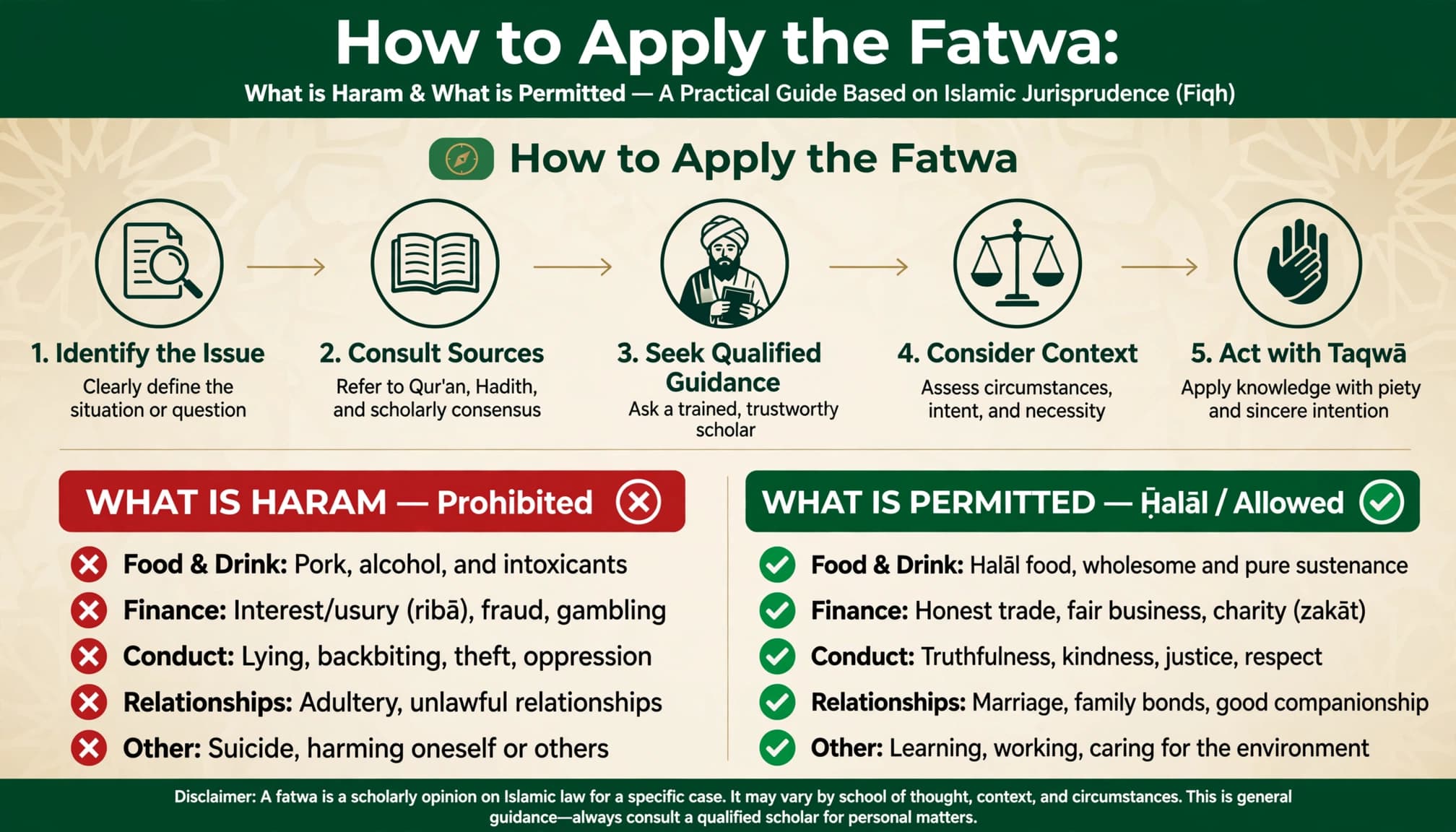
How to apply the fatwa: what is haram and what is permitted
A three-part test for any trade
To apply the fatwa, check every trade against three conditions. Both currencies need immediate settlement, the deal must carry no riba (interest), and it must avoid excessive uncertainty (gharar). Fail one and scholars treat the trade as haram or doubtful.
| Feature | Usually permitted | Usually haram or doubtful |
|---|---|---|
| Settlement | Both currencies change hands on the spot | Positions closed on screen, no real delivery |
| Interest | None | Overnight rollover (swap) |
| Funding | Your own cash | Borrowed margin and leverage |
| Purpose | Travel, trade, business needs | Pure price speculation |
If both currencies do not change hands now, or interest is involved, the trade fails the test.
What this means for you
Under this test, swapping ringgit for dollars at a counter passes. A leveraged position held overnight usually does not. So treat any forex Malaysia halal claim with caution until the broker explains how it avoids all three problems.
When in doubt, ask your state mufti's office before funding an account. Fatwa rulings differ slightly by state, and the official answer for your residence is the one that binds you.

Why scholars rule online spot forex haram
Three objections behind the ruling
Scholars who reject online retail trading usually give the same three reasons. They explain why the hukum forex trading Malaysia question rarely ends in simple approval, and each one maps to the test above.
- No real possession (qabdh): You buy EUR/USD on screen, but no euros reach your hands. The position closes as a price difference.
- Riba through leverage and swap: At 1:500 leverage, the broker effectively lends you most of the position. Hold it overnight and you pay or earn rollover interest.
- Gharar and maisir: Chasing tiny price moves with borrowed money looks more like gambling than commerce. Risk warnings from brokers often admit that most retail accounts lose money.
Why the "spot" label does not settle it
Calling a trade "spot" does not make it spot in the Islamic sense. Market convention settles spot trades in two business days (T+2), and brokers roll open positions forward to avoid delivery. Fiqh asks for actual exchange at the time of the contract.
Spot on a trading screen is not the same as spot in fiqh.
That gap explains why a swap-free label alone rarely satisfies scholars. Removing rollover interest fixes one problem. Leverage and missing delivery remain, so check all three objections before you accept any halal claim.
Do state muftis differ? Perlis, Perak, Sarawak and Indonesia
Malaysian states agree on the core issue
Malaysian fatwa bodies do not publish identical texts, but Perlis, Perak and Sarawak follow the same logic. They allow currency exchange with immediate delivery. They reject margin-based online trading that involves leverage, swap or pure speculation. The differences lie in wording, scope and whether the ruling is gazetted.
Gazetting matters. Where a fatwa is gazetted, it can bind Muslims in that state. Elsewhere it works as strong guidance. Check your own state's current ruling on the mufti office website or the JAKIM e-fatwa portal, because rulings get revised.
Indonesia is more open on spot trading
Indonesia's DSN-MUI Fatwa No. 28/2002 on currency exchange (al-sharf) permits spot transactions and treats delivery within two days as spot. It still bans forward deals and speculation. That is why some Indonesian sources say "spot forex is halal," a line Malaysian readers often meet in search results.
The same phrase, "spot forex," can carry different rulings in different countries.
Do not import another country's approval into your own decision. Follow the ruling for the state where you live, and ask the mufti's office if a broker's halal claim seems to rest on an Indonesian fatwa.
Practical examples: money changers, demo accounts and Islamic accounts
Money changers pass the test
Walk into a licensed money changer in Kuala Lumpur and swap RM1,000 for US dollars. You hand over ringgit, they hand over dollars, and the deal ends there. It meets immediate hand-to-hand settlement, carries no interest and serves a real need such as travel. Scholars treat this as the clearest case of permitted currency exchange.
Demo accounts carry no money
A demo account uses virtual funds, so there is no real stake and no riba. Most scholars see it as practice, not trading. Use it to learn charts and test strategies. Just remember that the three objections return the moment you move to a live account.
Islamic accounts fix only part of the problem
Brokers market swap-free accounts as "Islamic." These remove overnight rollover interest, and some charge a flat admin fee instead. That addresses riba, but it is only one of three objections. Before you accept any forex Malaysia halal label, ask:
- Does the account still offer leverage?
- Is there real delivery, or only a price difference settled on screen?
- Is the admin fee a swap charge under another name?
A swap-free account removes one objection, not all three.
Finally, ask your mufti's office about the account type. The hukum forex trading Malaysia for your state decides whether an Islamic account is acceptable to you.
What to remember before you trade
The hukum forex trading Malaysia comes down to three tests: immediate settlement, no riba, and no excessive gharar. A licensed money changer passes. Leveraged online trading with rollover interest and pure speculation usually fails. A swap-free label fixes only one of the three objections.
Before you fund any account, check your own state's fatwa and ask the mufti's office if a broker's halal claim feels unclear. Use a demo account to learn, and never borrow another country's approval for your own decision.
If you want to compare brokers by minimum deposit, leverage and account type, start with the best forex brokers ratings and reviews at gxmarkets. We explain the terms up front, so you can bring informed questions to your mufti before you trade.